
Can I Apply for a Business Loan If I Already Have Existing Loans?
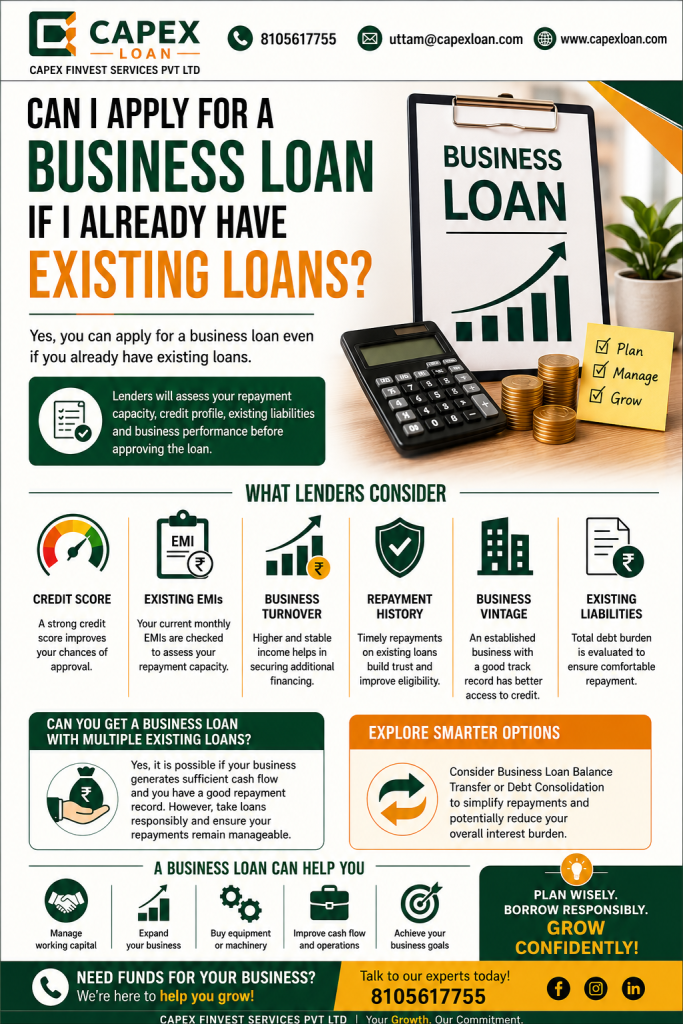
Yes, you can apply for a business loan even if you already have existing loans. Having an ongoing personal loan, business loan, home loan, or other credit facility does not automatically disqualify you from getting additional business financing. However, lenders will carefully evaluate your financial profile, repayment capacity, existing liabilities, and business performance before approving the loan. How Existing Loans Affect Business Loan Eligibility When you apply for a business loan with existing liabilities, lenders assess whether you can comfortably manage another EMI. Your current monthly obligations are compared with your income or business cash flow to determine your repayment capacity. A strong repayment history on existing loans can actually work in your favor. Regular and timely EMI payments demonstrate responsible credit management and may improve your chances of business loan approval. On the other hand, delayed payments, defaults, or excessive outstanding debt can make approval more difficult. Key Factors Lenders Consider Before approving a business loan, lenders generally consider several factors: Credit Score: A healthy credit score indicates responsible borrowing and repayment behavior. A higher score can improve your chances of obtaining favorable loan terms. Existing EMIs: Lenders check your current monthly EMI obligations. If a significant portion of your income is already committed to debt repayment, obtaining another loan may be challenging. Business Turnover: Your business revenue and cash flow help lenders determine whether your business can support an additional loan repayment. Repayment History: Consistent repayment of existing loans demonstrates financial discipline and strengthens your loan application. Business Vintage: The length of time your business has been operating can also influence eligibility. Established businesses with stable financial records may have better access to credit. Can You Get a Business Loan With Multiple Existing Loans? Yes, it is possible, provided your overall financial position supports another loan. If your business generates sufficient cash flow and you have maintained a good repayment record, lenders may consider your application despite existing loans. However, taking multiple loans without properly evaluating your repayment capacity can increase your financial burden. Before applying, calculate your existing EMIs, business expenses, and expected new EMI to ensure that repayment remains manageable. Consider Business Loan Balance Transfer or Debt Consolidation If you already have multiple loans with high interest rates, you may also explore options such as business loan balance transfer or debt consolidation. Depending on your eligibility and lender policies, consolidating certain debts could simplify repayment and potentially reduce your overall interest burden. How Capex Finvest Services Can Help At Capex Finvest Services Pvt Ltd, businesses can explore financing options based on their financial requirements and eligibility. Whether you need funds for working capital, business expansion, equipment purchases, or other business needs, understanding your existing liabilities is an important part of selecting suitable financing. Final Thoughts Having existing loans does not necessarily prevent you from applying for a business loan. The key is your credit profile, repayment history, existing EMI burden, business turnover, and overall repayment capacity. Before applying, review your current financial commitments and determine whether your business can comfortably manage an additional loan. A well-planned business loan can provide the funds needed to support expansion and manage cash flow without putting unnecessary pressure on your finances.
What Are the Eligibility Criteria to Get a Business Loan?
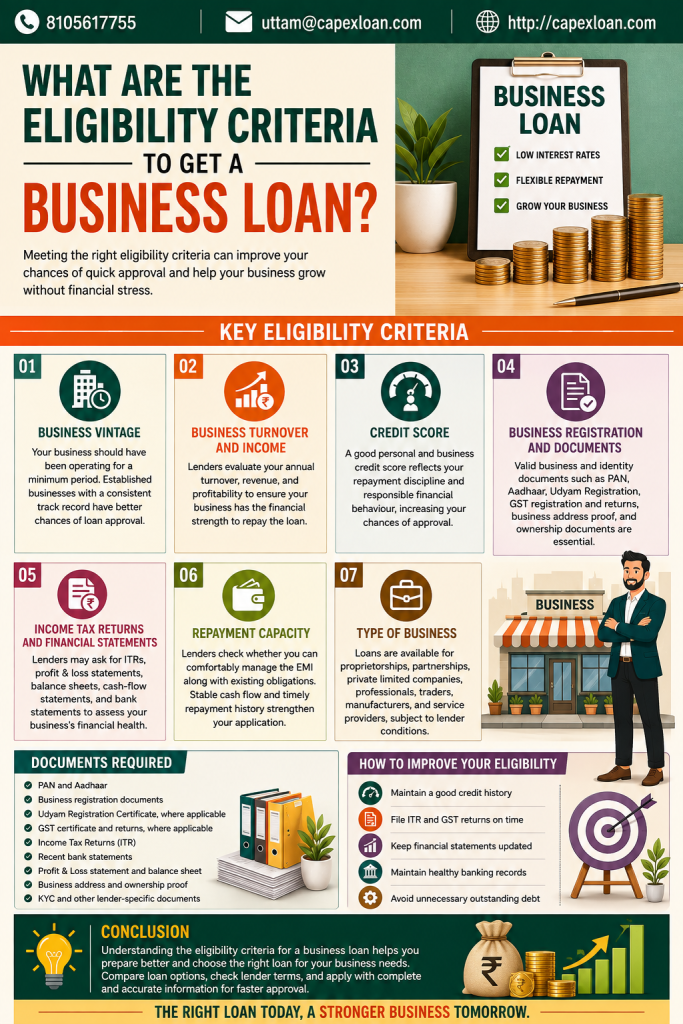
A business loan can help entrepreneurs manage working capital, expand operations, purchase equipment, open a new branch, or meet other business-related financial requirements. However, lenders assess several factors before approving a business loan. The exact business loan eligibility criteria may vary depending on the lender, loan amount, business type, financial profile, and repayment capacity. Key Business Loan Eligibility Criteria 1. Business Vintage One of the important factors considered by lenders is how long the business has been operating. Established businesses with a consistent operating history may have better chances of loan approval because they can demonstrate financial stability and business continuity. Some lenders may specify a minimum number of years in the current business. 2. Business Turnover and Income Lenders generally evaluate the annual turnover, revenue, and profitability of the business. A consistent income pattern indicates that the business may have sufficient cash flow to repay the loan. The required turnover can differ significantly between lenders and loan products. 3. Credit Score The applicant’s credit score and credit history can play an important role in business loan approval. A strong credit profile demonstrates responsible repayment behaviour. SBI’s MSME guidance recommends maintaining strong personal and business creditworthiness and making loan repayments on time. 4. Business Registration and Documents Applicants should be able to provide valid business and identity documents. Depending on the lender and business structure, these may include PAN, Aadhaar, Udyam Registration Certificate, GST registration and returns, business address proof, and ownership documents. SBI lists these among documents generally required for MSME lending. 5. Income Tax Returns and Financial Statements Lenders may request previous years’ Income Tax Returns (ITRs), profit and loss statements, balance sheets, cash-flow statements, and bank statements to assess the financial health of the business. SBI notes that ITRs for the past 1–3 years and bank statements for 6–12 months may generally be required, depending on the application. 6. Repayment Capacity Before approving a loan, lenders assess whether the applicant can comfortably manage the proposed EMI along with existing financial obligations. Stable cash flow, manageable liabilities, and timely repayment history can strengthen the application. 7. Type of Business Business loans may be available to proprietorships, partnerships, private limited companies, professionals, traders, manufacturers, and service providers, subject to the lender’s specific eligibility conditions. The business structure and nature of operations can influence the documents and assessment required. Documents Required for a Business Loan Commonly requested documents may include: How to Improve Your Business Loan Eligibility Maintain a good credit history, file ITR and GST returns on time, keep financial statements updated, maintain healthy banking records, and avoid unnecessary outstanding debt. SBI also recommends demonstrating consistent income and turnover trends and maintaining a clear banking trail. Conclusion Understanding the eligibility criteria for a business loan can help you prepare your application more effectively. Business vintage, turnover, profitability, credit history, documentation, and repayment capacity are among the key factors lenders may consider. Since eligibility requirements differ between lenders, it is advisable to compare suitable loan options and check the specific terms before applying.
How Can You Get a Lower Interest Rate on Your Home Loan?

Getting a home loan at a lower interest rate can significantly reduce your monthly EMI and the total interest paid over the loan tenure. Since home loans are usually long-term commitments, even a small reduction in the interest rate can lead to substantial savings. If you are planning to apply for a home loan or transfer your existing loan, here are some effective ways to get a lower home loan interest rate. 1. Maintain a Good Credit Score Your credit score is one of the most important factors lenders consider when determining your home loan interest rate. A high credit score indicates responsible credit management and can improve your chances of getting competitive interest rates. Pay your EMIs and credit card bills on time, maintain a healthy credit utilization ratio, and avoid making multiple loan applications within a short period. 2. Compare Home Loan Interest Rates Do not accept the first loan offer you receive. Compare home loan interest rates from different banks and financial institutions. Look beyond the advertised rate and check processing fees, prepayment charges, loan tenure, and other applicable costs. Comparing multiple offers can help you choose a more affordable home loan. 3. Choose the Right Loan Tenure A longer tenure generally results in lower EMIs but increases the total interest payable. If your financial situation allows, choosing a shorter tenure can reduce the overall interest burden. You can also consider making occasional prepayments to reduce your outstanding principal and interest costs. 4. Consider a Home Loan Balance Transfer If you already have a home loan with a high interest rate, a home loan balance transfer may help you move your outstanding loan to another lender offering a lower rate. However, consider processing fees, foreclosure charges where applicable, and other transfer costs before making a decision. 5. Negotiate With Your Lender Existing customers with a strong repayment history may have an opportunity to negotiate better loan terms. If your credit profile has improved or market interest rates have changed, speak with your lender and ask whether a lower interest rate is available. 6. Maintain a Stable Financial Profile Lenders also consider factors such as income, employment stability, existing financial obligations, and repayment history. Maintaining a stable income and keeping your debt obligations under control can strengthen your loan application and potentially help you secure better terms. For borrowers looking for assistance in comparing loan options, Capex Finvest Services Pvt Ltd can help you understand available financing options and make a more informed decision based on your financial requirements. Conclusion Getting a lower home loan interest rate requires careful planning and comparison. Maintaining a strong credit score, comparing lenders, selecting an appropriate tenure, negotiating with your lender, and considering a home loan balance transfer can help reduce your borrowing costs. Before choosing a loan, always evaluate the interest rate along with processing fees, terms, and other charges to understand the overall cost of the loan.
Am I Eligible for a Home Loan Balance Transfer?
If you are paying an existing home loan and feel that your current interest rate is high, you may consider a home loan balance transfer to reduce your financial burden. One of the most common questions borrowers ask is, “Am I eligible for a home loan balance transfer?” The answer depends on several factors, including your repayment history, credit score, income stability, outstanding loan amount, and the terms offered by the new lender. A home loan balance transfer allows you to shift your existing home loan from your current bank or financial institution to another lender that offers better interest rates, flexible repayment options, or additional benefits. However, lenders follow specific eligibility criteria before approving a balance transfer application to ensure that the borrower has the ability to repay the loan successfully. Key Factors That Determine Home Loan Balance Transfer Eligibility 1. Good Repayment HistoryOne of the most important factors considered by lenders is your repayment track record. If you have consistently paid your EMIs on time without delays or defaults, your chances of getting approval for a home loan balance transfer increase significantly. A strong repayment history demonstrates financial discipline and reduces risk for the new lender. 2. Credit ScoreYour credit score plays a major role in determining your eligibility for a home loan balance transfer. A higher credit score indicates responsible credit management and may help you negotiate better interest rates. Before applying, it is advisable to check your credit score and ensure that your credit profile is healthy. 3. Remaining Loan TenureThe remaining tenure of your existing home loan is another important consideration. Generally, borrowers with a significant repayment period remaining may benefit more from a balance transfer because they have more time to save on interest costs. Transferring a loan that is close to completion may provide limited financial benefits. 4. Income and Employment StabilityLenders evaluate your income, employment status, and financial stability before approving a balance transfer. Salaried professionals, self-employed individuals, and business owners must provide relevant income documents to prove their repayment capacity. 5. Outstanding Loan Amount and Property DetailsThe outstanding balance of your existing home loan and the value of your property also influence eligibility. The new lender may conduct a property evaluation and verify legal documents before approving the transfer. If you are unsure about your eligibility or want to compare different balance transfer options, Capexloan.com can help simplify the process. Capex Finvest provides personalized assistance for borrowers looking to transfer their home loans to better lending options. Their experts evaluate your existing loan details, assess eligibility requirements, compare suitable offers from financial institutions, and guide you through documentation and application procedures. With professional support, borrowers can make informed decisions and choose a balance transfer solution that aligns with their financial goals. Documents Required for Home Loan Balance Transfer To process a balance transfer application, lenders typically require documents such as identity proof, address proof, income proof, bank statements, existing loan statements, repayment history, property documents, and a foreclosure statement from the current lender. Providing accurate and complete documents helps speed up the approval process. Benefits of Meeting Balance Transfer Eligibility Criteria If you qualify for a home loan balance transfer, you may enjoy several benefits, including: Before transferring your home loan, it is important to calculate the overall savings after considering processing fees, legal charges, and other transfer-related expenses. A balance transfer is beneficial only when the long-term savings outweigh the associated costs. In conclusion, you may be eligible for a home loan balance transfer if you have a good repayment history, strong credit score, stable income, and a sufficient outstanding loan tenure. Every lender has different eligibility requirements, so evaluating your financial profile is essential. With the guidance and support of Capexloan.com , you can explore suitable balance transfer opportunities, understand your eligibility, and take a step toward reducing your home loan cost while achieving greater financial flexibility.
Is the New Interest Rate Fixed or Floating After a Home Loan Balance Transfer?

If you’re planning a home loan balance transfer, one of the first questions you’ll likely ask is, “Is the new interest rate fixed or floating?” The answer is that it can be either fixed or floating, depending on the lender’s offerings and the loan product you choose. Understanding the difference between these two interest rate options is essential because it directly affects your monthly EMI, total interest payable, and overall borrowing experience. A fixed interest rate remains the same throughout the agreed period of your loan. This means your EMI stays constant regardless of changes in market interest rates. Fixed-rate home loans are ideal for borrowers who prefer stability and predictable monthly payments. If you have a fixed monthly income and want certainty in your financial planning, choosing a fixed-rate balance transfer can be a suitable option. On the other hand, a floating interest rate changes based on market conditions and the lender’s benchmark rate. If benchmark rates decline, your home loan interest rate may also decrease, potentially reducing your EMI or loan tenure. However, if market interest rates increase, your EMI or repayment period may also rise. Floating-rate home loans are popular because they often start with lower interest rates than fixed-rate loans and allow borrowers to benefit from favorable market movements. When deciding between a fixed and floating interest rate, consider factors such as your income stability, financial goals, risk tolerance, and the expected interest rate trend. If you expect interest rates to remain stable or decline, a floating-rate loan may help you save more over the loan tenure. Conversely, if you are concerned about future rate increases, a fixed-rate loan provides greater certainty and protection from market fluctuations. Many borrowers transferring their home loans choose floating interest rates because they are commonly linked to external benchmark rates, making the pricing more transparent. However, the right choice ultimately depends on your personal financial situation and long-term repayment strategy. If you’re uncertain about which interest rate option is best for your balance transfer, Capex Finvest can help you make an informed decision. Capex Finvest assists borrowers in comparing home loan balance transfer offers from multiple banks and financial institutions. Their experienced professionals explain the differences between fixed and floating interest rates, evaluate your financial profile, estimate your potential savings, and recommend the most suitable option based on your repayment goals. From eligibility assessment and documentation to lender coordination and application support, Capex Finvest offers end-to-end assistance, ensuring a smooth and hassle-free balance transfer process. Apart from the interest rate type, it’s important to compare other aspects of the loan, including processing fees, legal charges, valuation costs, prepayment options, customer service, and repayment flexibility. A loan with a slightly higher interest rate but lower overall charges may sometimes prove more cost-effective than one with the lowest advertised rate. Another advantage of a home loan balance transfer is the opportunity to apply for a top-up loan if you meet the lender’s eligibility criteria. A top-up loan can provide additional funds for home renovation, education, business expansion, medical expenses, or other financial needs, often at competitive interest rates compared to unsecured borrowing options. Before finalizing your decision, carefully review the loan agreement to understand how interest rate revisions are handled, especially for floating-rate loans. Knowing when and how your rate may change helps you plan your finances more effectively and avoid unexpected surprises. In conclusion, the new interest rate after a home loan balance transfer can be either fixed or floating, depending on the lender and the loan product you choose. Both options have unique advantages, and the right choice depends on your financial priorities and risk appetite. With expert guidance from Capex Finvest, you can compare multiple balance transfer offers, understand the benefits of each interest rate option, and select a home loan that delivers maximum savings, repayment flexibility, and long-term financial peace of mind
Can I Reduce My Loan Tenure Instead of My EMI After a Home Loan Balance Transfer?
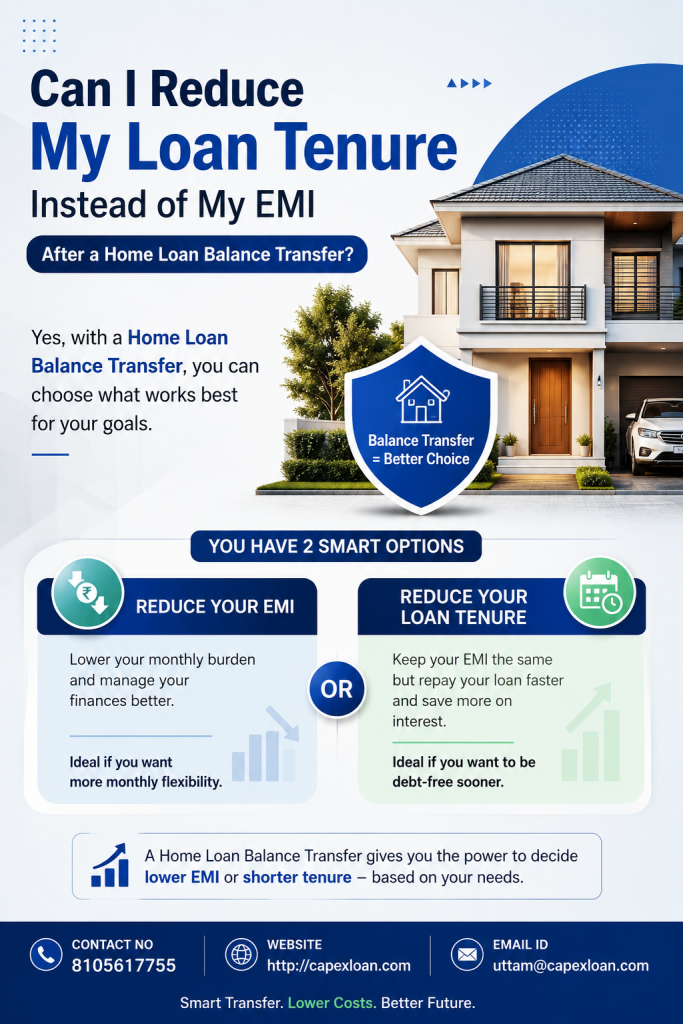
Yes, you can reduce your loan tenure instead of lowering your EMI when you opt for a home loan balance transfer. In fact, many financial experts recommend this approach if your monthly budget comfortably allows you to continue paying the same EMI. By choosing a shorter repayment tenure, you can significantly reduce the total interest payable over the life of your home loan and become debt-free sooner. A home loan balance transfer enables you to move your outstanding loan from your existing lender to another financial institution offering a lower interest rate or better loan terms. Once your balance transfer is approved, you generally have two repayment options. The first is to reduce your EMI while keeping the same loan tenure, and the second is to maintain your current EMI and shorten the repayment period. While both options offer financial benefits, reducing the loan tenure often results in greater long-term savings. When your lender offers a lower interest rate, a larger portion of each EMI goes toward repaying the principal amount instead of interest. As a result, your outstanding balance decreases faster, allowing you to close your loan earlier than originally planned. Even a reduction of a few years in your repayment schedule can help you save a substantial amount in total interest. For borrowers with stable income and sufficient monthly cash flow, reducing the loan tenure is often a smarter financial strategy. It minimizes the overall cost of borrowing and allows you to achieve financial freedom earlier. However, if your priority is reducing monthly financial commitments, lowering your EMI may be the better option. The right choice depends on your income, future financial goals, and overall budget. Before deciding, it is advisable to compare both scenarios. Many lenders provide home loan calculators that allow you to estimate how much interest you can save by reducing the tenure instead of the EMI. Reviewing these calculations can help you choose the repayment option that best suits your financial objectives. If you’re unsure which option is right for you, Capex Finvest can provide expert guidance throughout the home loan balance transfer process. Capex Finvest helps borrowers compare balance transfer offers from leading banks and financial institutions, evaluate interest rates, estimate potential savings, and understand the impact of different repayment options. Their experienced professionals assess your existing loan, financial profile, and repayment capacity to recommend the most suitable strategy. Whether your goal is to lower your EMI or shorten your loan tenure, Capex Finvest simplifies the entire process with personalized assistance and end-to-end support. It is also important to consider the costs associated with a balance transfer, such as processing fees, legal charges, valuation fees, and administrative expenses. While these costs are usually outweighed by long-term interest savings, calculating the overall financial benefit ensures that transferring your loan is the right decision. Additionally, many lenders offer a top-up loan along with a home loan balance transfer. If you have a good repayment history and meet the lender’s eligibility criteria, you may qualify for additional funds for home renovation, education, business expansion, medical expenses, or other personal financial needs. This can be an added advantage while enjoying the benefits of a lower interest rate. In conclusion, yes, you can reduce your loan tenure instead of your EMI after a home loan balance transfer, and doing so can lead to significant interest savings over the remaining life of your loan. If you have the financial capacity to continue paying your existing EMI, shortening the repayment period is often the most cost-effective option. With professional support from Capex Finvest, you can compare the best balance transfer opportunities, choose the ideal repayment structure, and maximize your long-term financial savings while making your home loan more efficient and affordable.
Can I Reduce My Loan Tenure Instead of My EMI After a Home Loan Balance Transfer?
Yes, you can reduce your loan tenure instead of lowering your EMI when you opt for a home loan balance transfer. In fact, many financial experts recommend this approach if your monthly budget comfortably allows you to continue paying the same EMI. By choosing a shorter repayment tenure, you can significantly reduce the total interest payable over the life of your home loan and become debt-free sooner. A home loan balance transfer enables you to move your outstanding loan from your existing lender to another financial institution offering a lower interest rate or better loan terms. Once your balance transfer is approved, you generally have two repayment options. The first is to reduce your EMI while keeping the same loan tenure, and the second is to maintain your current EMI and shorten the repayment period. While both options offer financial benefits, reducing the loan tenure often results in greater long-term savings. When your lender offers a lower interest rate, a larger portion of each EMI goes toward repaying the principal amount instead of interest. As a result, your outstanding balance decreases faster, allowing you to close your loan earlier than originally planned. Even a reduction of a few years in your repayment schedule can help you save a substantial amount in total interest. For borrowers with stable income and sufficient monthly cash flow, reducing the loan tenure is often a smarter financial strategy. It minimizes the overall cost of borrowing and allows you to achieve financial freedom earlier. However, if your priority is reducing monthly financial commitments, lowering your EMI may be the better option. The right choice depends on your income, future financial goals, and overall budget. Before deciding, it is advisable to compare both scenarios. Many lenders provide home loan calculators that allow you to estimate how much interest you can save by reducing the tenure instead of the EMI. Reviewing these calculations can help you choose the repayment option that best suits your financial objectives. If you’re unsure which option is right for you, Capex Finvest can provide expert guidance throughout the home loan balance transfer process. Capex Finvest helps borrowers compare balance transfer offers from leading banks and financial institutions, evaluate interest rates, estimate potential savings, and understand the impact of different repayment options. Their experienced professionals assess your existing loan, financial profile, and repayment capacity to recommend the most suitable strategy. Whether your goal is to lower your EMI or shorten your loan tenure, Capex Finvest simplifies the entire process with personalized assistance and end-to-end support. It is also important to consider the costs associated with a balance transfer, such as processing fees, legal charges, valuation fees, and administrative expenses. While these costs are usually outweighed by long-term interest savings, calculating the overall financial benefit ensures that transferring your loan is the right decision. Additionally, many lenders offer a top-up loan along with a home loan balance transfer. If you have a good repayment history and meet the lender’s eligibility criteria, you may qualify for additional funds for home renovation, education, business expansion, medical expenses, or other personal financial needs. This can be an added advantage while enjoying the benefits of a lower interest rate. In conclusion, yes, you can reduce your loan tenure instead of your EMI after a home loan balance transfer, and doing so can lead to significant interest savings over the remaining life of your loan. If you have the financial capacity to continue paying your existing EMI, shortening the repayment period is often the most cost-effective option. With professional support from Capex Finvest, you can compare the best balance transfer opportunities, choose the ideal repayment structure, and maximize your long-term financial savings while making your home loan more efficient and affordable.
Will My EMI Reduce After a Home Loan Balance Transfer?
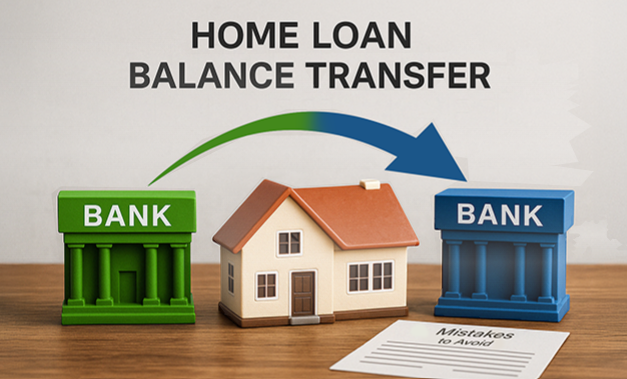
One of the most common questions borrowers ask before switching lenders is, “Will my EMI reduce after the transfer?” The simple answer is yes, in many cases your EMI can reduce after a home loan balance transfer, provided the new lender offers a lower interest rate and you choose to keep the remaining loan tenure the same. A lower EMI can improve your monthly cash flow and make your home loan more affordable over the long term. A home loan balance transfer allows you to transfer your outstanding loan from your current lender to another financial institution offering better interest rates or improved loan terms. Since your EMI is calculated based on the loan amount, interest rate, and repayment tenure, a reduction in the interest rate generally leads to a lower monthly installment. For example, if your current home loan carries a higher interest rate and you transfer it to a lender offering a more competitive rate, your monthly EMI may decrease significantly. This means you can save money every month while continuing to repay your loan comfortably. However, the actual reduction in EMI depends on factors such as your outstanding loan balance, remaining tenure, and the interest rate offered by the new lender. It’s also important to understand that lowering your EMI is not the only option. Some borrowers prefer to keep their EMI unchanged after the balance transfer. In this case, the extra amount paid every month goes toward reducing the principal faster, allowing you to repay the loan in a shorter period and save even more on total interest. Choosing between a lower EMI and a shorter tenure depends on your financial goals and monthly budget. Apart from the interest rate, lenders may also evaluate your credit score, repayment history, income, employment type, and loan eligibility before approving a balance transfer. Borrowers with a strong repayment record and a healthy credit profile are more likely to receive attractive interest rates, resulting in greater EMI savings. If you’re considering a home loan balance transfer but are unsure how much your EMI could reduce, Capex Finvest can help you make the right decision. Capex Finvest assists borrowers in comparing multiple balance transfer offers from leading banks and financial institutions. Their experts analyze your existing loan, estimate potential EMI savings, explain eligibility criteria, and guide you through the entire balance transfer process. By evaluating both interest rates and associated charges, Capex Finvest helps you choose a solution that maximizes your overall savings while ensuring a smooth and hassle-free experience. Before proceeding with a balance transfer, it’s essential to compare more than just the EMI. Processing fees, legal charges, valuation costs, and administrative expenses should also be considered. Sometimes a slightly lower EMI may not result in significant savings if the transfer costs are too high. Calculating the total cost of the loan after the transfer provides a clearer picture of the actual financial benefit. Many borrowers also take advantage of a top-up loan during the balance transfer process. If eligible, you can obtain additional funds for home renovation, education, business expansion, medical expenses, or other financial requirements at competitive interest rates. This added flexibility makes a home loan balance transfer even more valuable. In conclusion, your EMI can reduce after a home loan balance transfer if you secure a lower interest rate and retain the same repayment tenure. The exact savings depend on your loan amount, remaining tenure, and lender’s terms. With expert assistance from Capex Finvest, you can compare the best balance transfer options, reduce your EMI, lower your overall interest burden, and make your home loan more cost-effective for the future.
How Much Can I Save by Transferring My Home Loan?
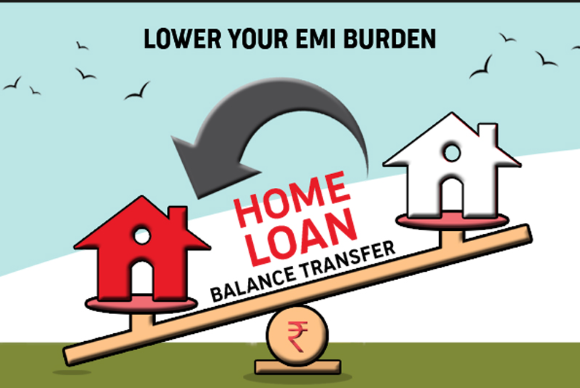
A home loan balance transfer is one of the smartest financial decisions for borrowers looking to reduce their overall borrowing costs. If you’re wondering, “How much can I save by transferring my loan?”, the answer depends on factors such as your current interest rate, the new lender’s interest rate, your outstanding loan amount, and the remaining loan tenure. Even a small reduction in the interest rate can lead to significant savings over the life of your loan. When you transfer your home loan to another lender offering a lower interest rate, your monthly EMI (Equated Monthly Installment) may decrease, or you can choose to keep the same EMI and reduce your loan tenure. Both options help you save money, but reducing the loan tenure generally results in greater interest savings over the long term. For example, if you have a home loan with a substantial outstanding balance and several years remaining, even a reduction of 0.50% to 1.00% in the interest rate can translate into savings of several lakhs over the remaining tenure. The exact amount depends on your individual loan profile, making it essential to calculate the total interest payable before and after the balance transfer. One of the biggest advantages of a home loan balance transfer is the opportunity to improve your overall financial planning. Lower EMIs can increase your monthly cash flow, giving you more flexibility to invest, save for future goals, or manage other financial commitments. Alternatively, maintaining your existing EMI while benefiting from a lower interest rate allows you to repay the loan faster and become debt-free sooner. However, it’s important to look beyond the interest rate alone. Before transferring your loan, consider the associated costs, including processing fees, legal charges, technical valuation fees, and administrative expenses. Compare these costs against the total interest savings to determine whether the balance transfer is financially beneficial. If you’re unsure whether switching lenders is the right decision, Capex Finvest can help you make an informed choice. Capex Finvest assists borrowers in comparing multiple home loan balance transfer offers from leading financial institutions, helping you identify the option that provides the maximum savings. Their experts evaluate your existing loan, estimate potential interest savings, explain eligibility requirements, and guide you through the complete documentation and approval process. This personalized approach ensures that you choose a balance transfer solution that aligns with your financial goals. Another benefit of transferring your home loan is the possibility of obtaining a top-up loan. If you have maintained a good repayment history and meet the lender’s eligibility criteria, you may qualify for additional funds at competitive interest rates. These funds can be used for home renovation, higher education, medical expenses, business expansion, or other personal financial needs, often at lower rates than unsecured loans. Before finalizing a home loan balance transfer, compare the revised EMI, total interest payable, remaining loan tenure, processing charges, and any additional features offered by the new lender. Using a home loan balance transfer calculator can also help you estimate your potential savings accurately. In conclusion, the amount you can save by transferring your home loan depends on your current loan terms and the new lender’s offer. With careful evaluation and professional guidance from Capex Finvest, you can secure a better interest rate, reduce your overall borrowing cost, lower your EMI or loan tenure, and make your home loan more affordable. A well-planned balance transfer can deliver substantial long-term savings while improving your overall financial health.
What is the interest rate for a home loan balance transfer?
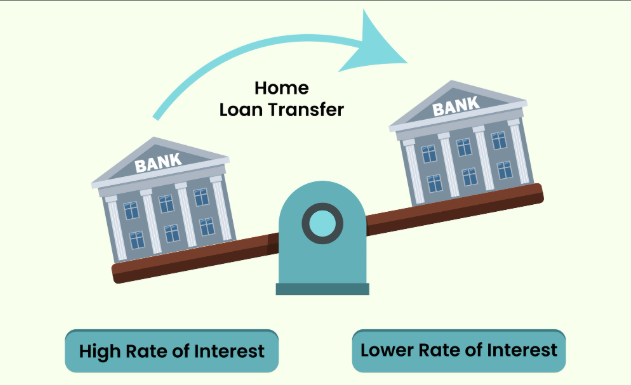
A home loan balance transfer allows you to move your existing home loan from one lender to another that offers a lower interest rate, better repayment terms, or additional benefits. One of the most common questions borrowers ask is, “What is the interest rate for a home loan balance transfer?” The answer depends on several factors, including your credit profile, outstanding loan amount, repayment history, income, and the lender’s current lending policies. Generally, home loan balance transfer interest rates are competitive and are often lower than the rates offered on existing home loans. Financial institutions introduce attractive balance transfer offers to encourage borrowers to switch lenders and reduce their overall borrowing costs. A lower interest rate can significantly decrease your monthly EMI or help you repay your loan faster by reducing the loan tenure. The interest rate you receive is influenced by your credit score, employment type (salaried or self-employed), property value, outstanding loan balance, and repayment history. Borrowers with a strong credit score and consistent EMI payments are more likely to qualify for the best available rates. Therefore, maintaining a healthy credit profile can improve your chances of securing a favorable balance transfer offer. Another important factor to consider is the total cost of transferring the loan. While a lower interest rate is attractive, you should also evaluate processing fees, legal charges, valuation charges, and any applicable administrative costs. Comparing the overall savings rather than focusing solely on the interest rate helps you make a well-informed financial decision. If you are planning to transfer your existing home loan, Capex Finvest can help simplify the process. Capex Finvest assists borrowers in comparing multiple lending options, understanding eligibility criteria, and selecting the most suitable home loan balance transfer solution. Their experienced team guides customers through documentation, application processing, and lender coordination, making the transition smooth and hassle-free. Whether your goal is to reduce your EMI, shorten your repayment tenure, or access better loan features, Capex Finvest provides personalized support to help you achieve your financial objectives. Many borrowers also choose a balance transfer with a top-up loan. If you have maintained a good repayment record, you may be eligible for additional funding at competitive interest rates. A top-up loan can be used for home renovation, education, medical expenses, business expansion, or other personal financial requirements, often at a lower interest rate than unsecured loans. Before deciding on a balance transfer, calculate your expected savings over the remaining loan tenure. Compare the revised EMI, interest payable, processing charges, and any additional benefits such as flexible repayment options or top-up eligibility. Even a small reduction in the interest rate can lead to substantial savings over the life of the loan. In conclusion, the interest rate for a home loan balance transfer varies from borrower to borrower and depends on multiple eligibility factors. Instead of choosing a lender based solely on the advertised rate, evaluate the complete loan package, associated charges, customer service, and long-term savings. With expert guidance from Capex Finvest, you can compare the best balance transfer options, secure competitive interest rates, and make an informed decision that supports your long-term financial goals.